Description
A Gratitude Journal Built on Real Positive Psychology
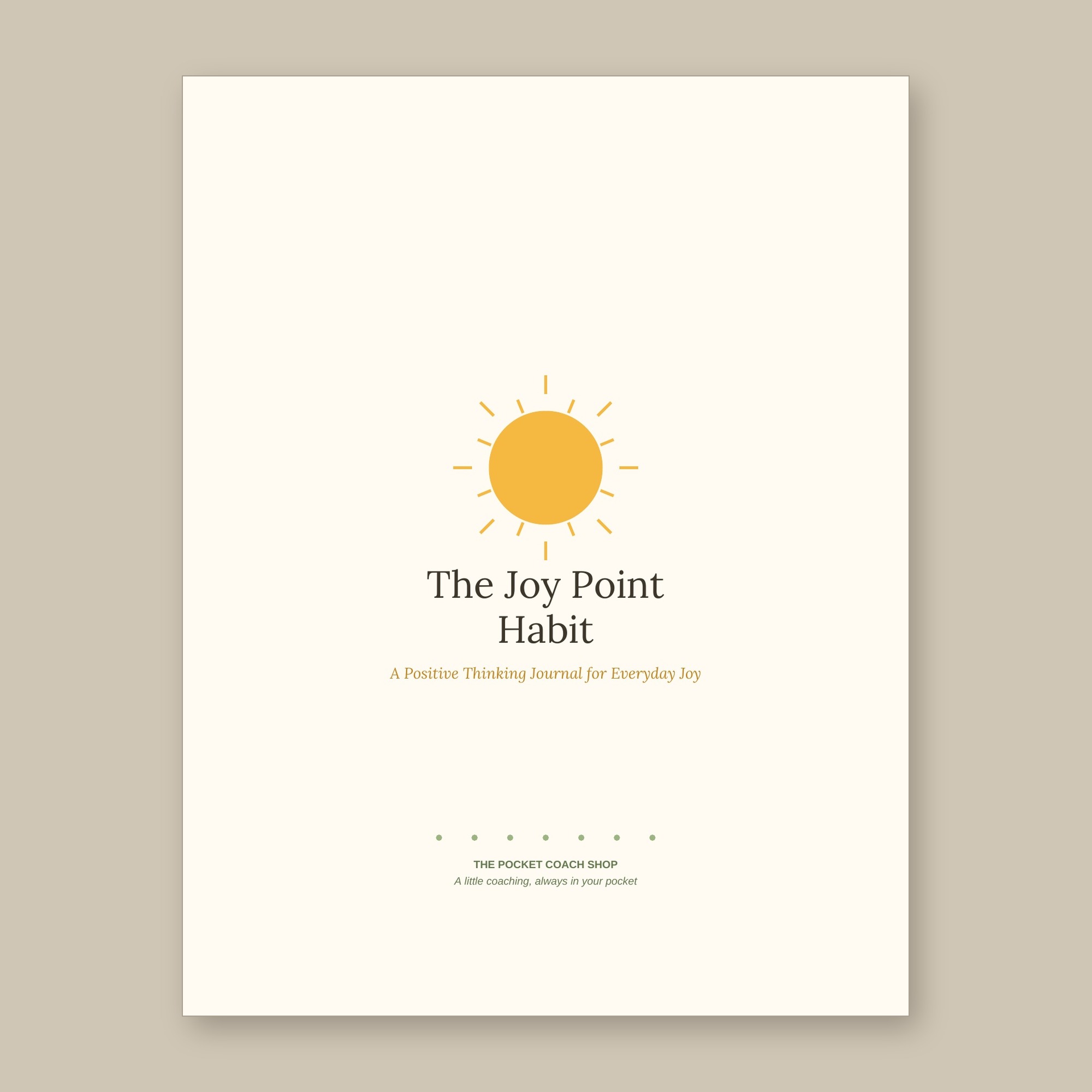
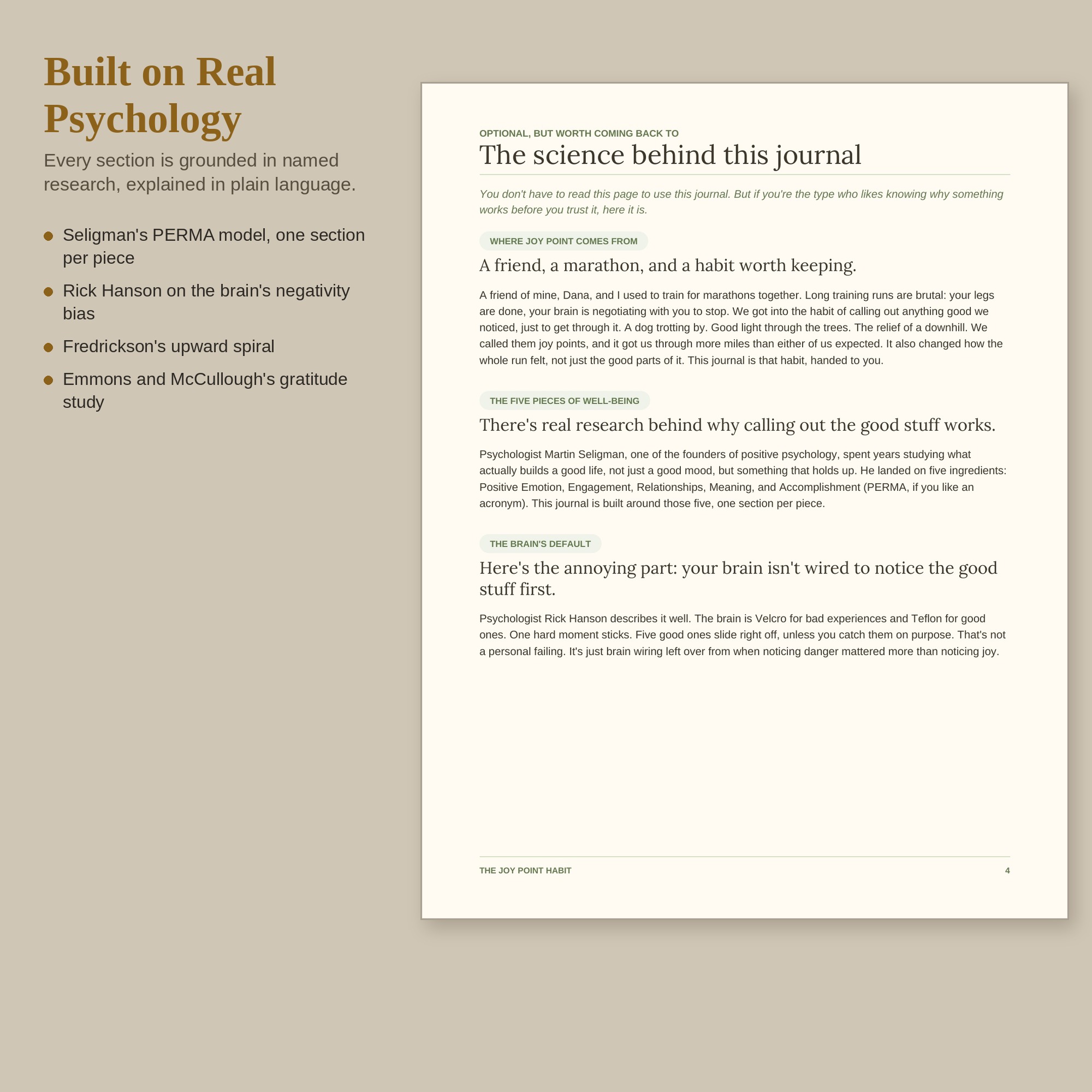
Most gratitude journals ask you to list three things and move on. The Joy Point Habit goes further. It’s built around Martin Seligman’s PERMA model, with a section for each of the five pieces of real well-being: Positive Emotion, Engagement, Relationships, Meaning, and Accomplishment. Every practice comes with the research behind it, explained in plain language, so you always know why it works.
Why I Made This
I’m Linda Fliss, a life coach with a master’s degree in Marriage and Family Therapy and more than 20 years of experience helping people work through what keeps them stuck. This journal started with something much smaller than a framework. My friend Dana and I used to train for marathons together, and on the hardest miles we’d call out anything good we noticed, just to get through it. A dog trotting by. Good light through the trees. The relief of a downhill. We called them joy points.
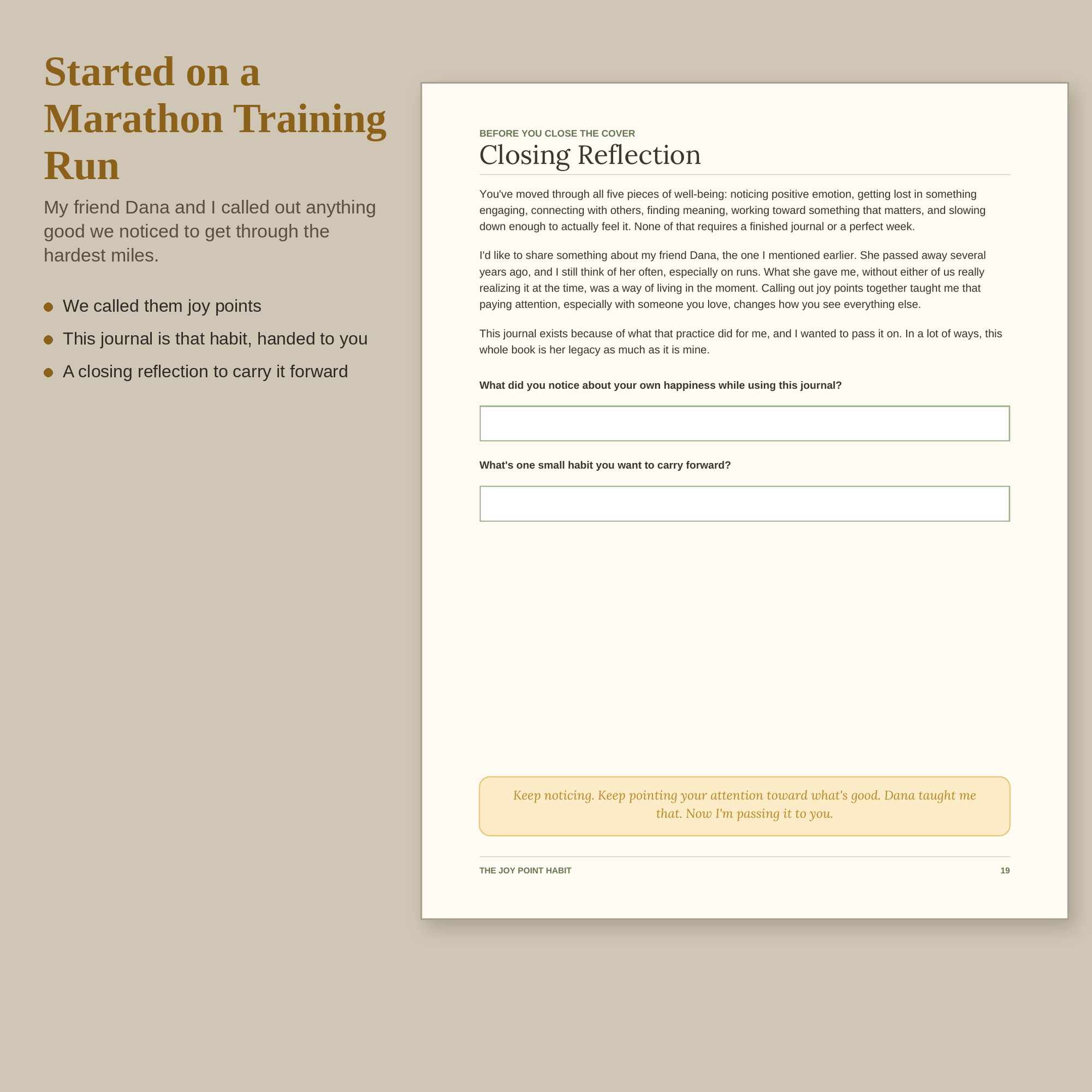
Dana passed away several years ago, and I still think of her on every run. This journal is that habit, and a piece of her, handed to you. It’s also where I start with every client: a simple, mindful gratitude practice before anything else.
What Makes It Different: The Research Is Woven Throughout
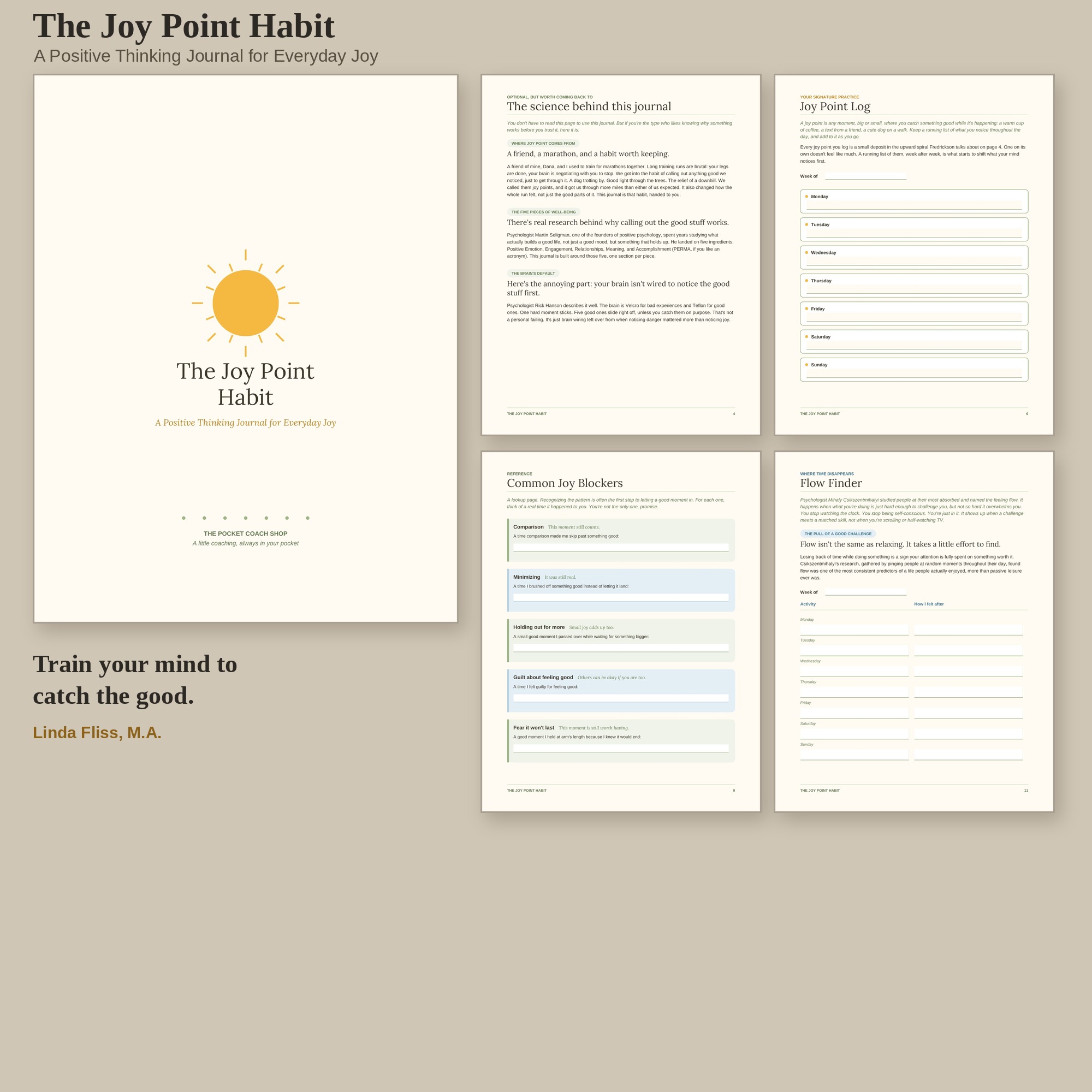
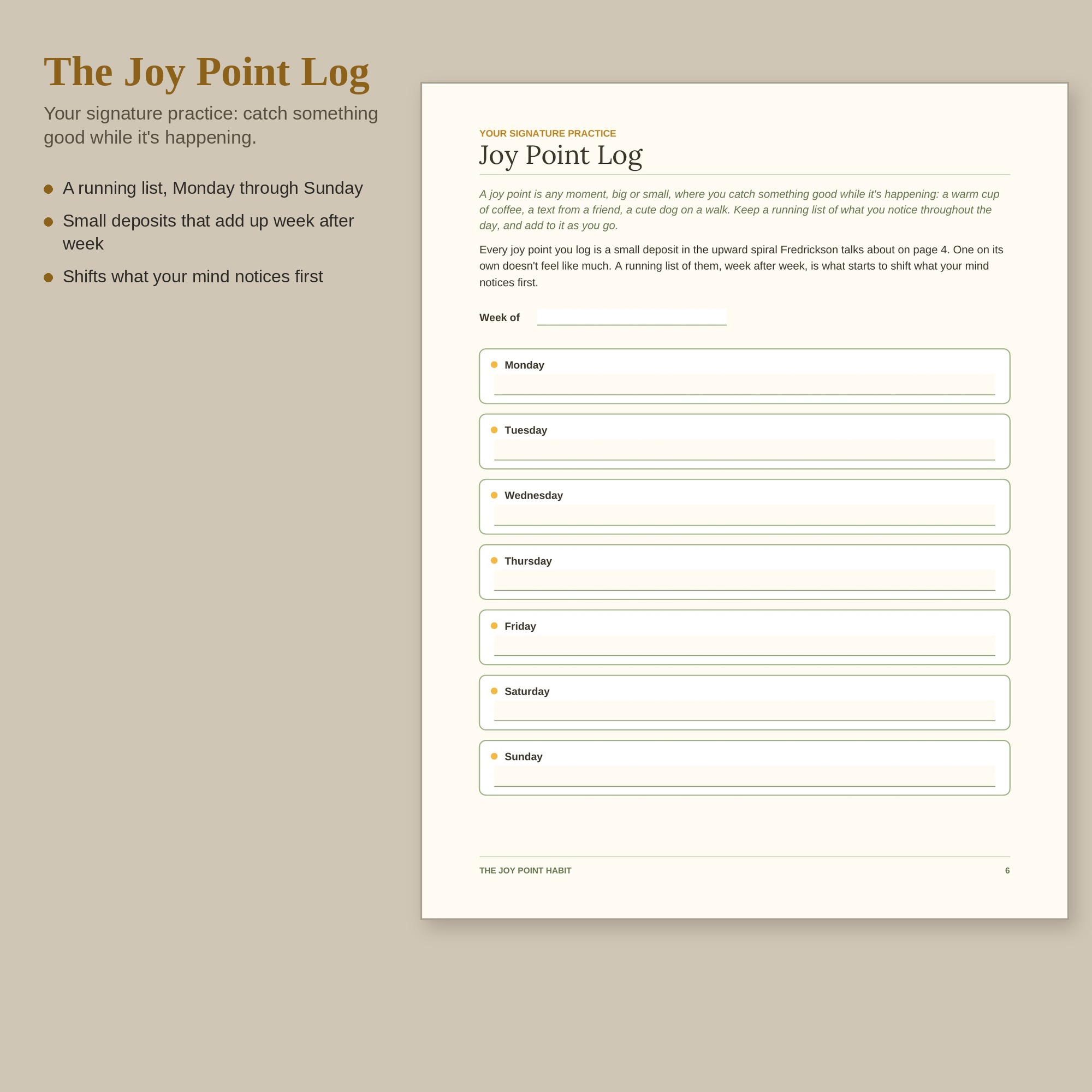
Most journals put the psychology, if there is any, on one intro page you skim once. This one weaves it into the practices themselves: Barbara Fredrickson’s upward spiral on the Joy Point Log, Emmons and McCullough’s gratitude research on the Gratitude Tracker, Csikszentmihalyi’s flow research on the Flow Finder, and Elizabeth Dunn’s research on giving on the Kindness Tracker. You’re never just filling in a blank.
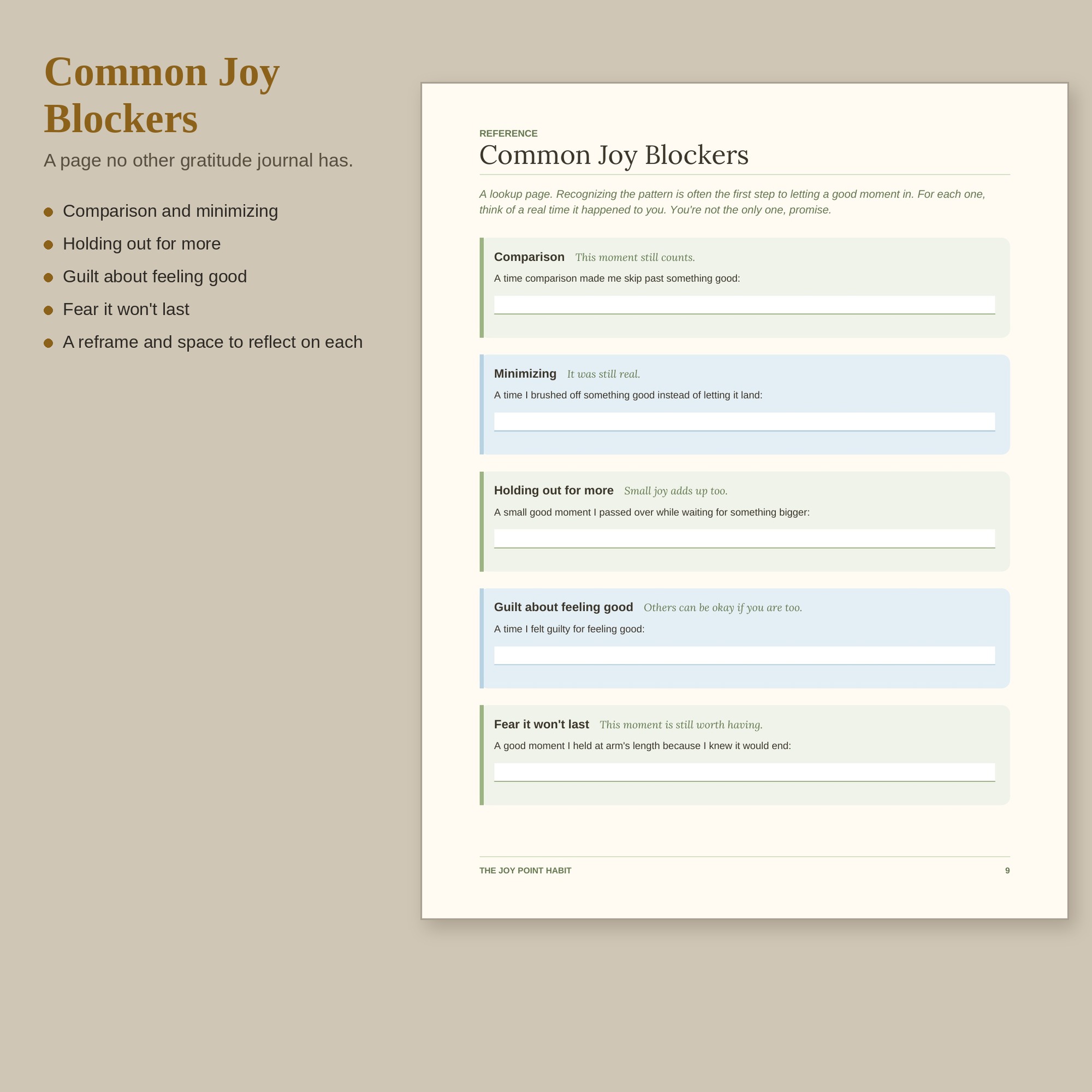
A Page No Other Gratitude Journal Has: Common Joy Blockers
Noticing a good moment is only half of it. The Common Joy Blockers page names the five most common ways people talk themselves out of a good moment: comparison, minimizing, holding out for more, guilt about feeling good, and fear it won’t last. Each one comes with a short reframe and space to reflect on a time it happened to you.
What’s Included
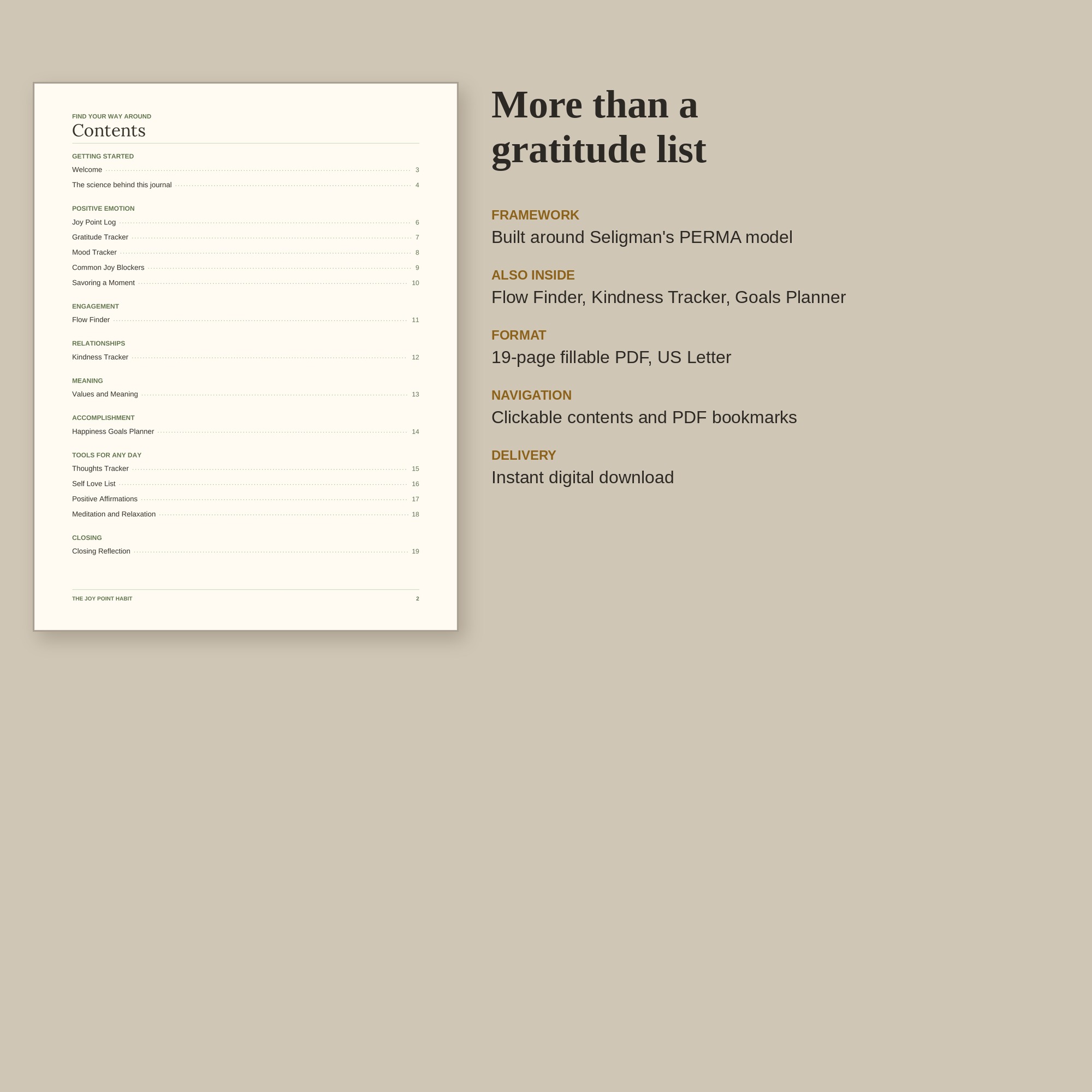
- The Science Behind This Journal: PERMA, the brain’s negativity bias, and the research behind every section
- Joy Point Log: your signature practice, a running weekly list of good moments as they happen
- Gratitude Tracker and Mood Tracker for the week
- Common Joy Blockers reference page
- Savoring a Moment: a slower, sense-by-sense practice for one moment worth sitting with
- Flow Finder: notice what puts you in a state of flow
- Kindness Tracker: kindness given and received, because both count
- Values and Meaning and a Happiness Goals Planner
- Thoughts Tracker: a CBT-based reframe for hard thoughts
- Self Love List and Positive Affirmations that feel believable, not idealized
- Meditation and Relaxation: a short guided mindfulness practice
- Closing Reflection to carry the habit forward
- 19-page fillable PDF with a clickable contents page and PDF bookmarks
- Type on any device, or print and write by hand
- US Letter size (8.5″ x 11″)
Frequently Asked Questions
Is this fillable, or do I need to print it?
Both. Every field is a real fillable PDF field, so you can type directly in Adobe Acrobat Reader (free) or in GoodNotes or Notability on a tablet. It’s also fully printable.
Do I need to know anything about positive psychology?
No. Every research reference is explained in plain language as you go. All you need is a willingness to notice.
Is it dated?
No. The weekly pages are undated, so you can start any day and print extra copies for your own use whenever you need them.
Is this a substitute for therapy?
No. It’s a practical companion for everyday well-being, not a replacement for professional mental health care.
How do I receive it?
Your PDF is available as an instant digital download right after checkout. No physical item will be shipped.
© Created by Linda Fliss, M.A., Twin Cities Life Coaching. For personal use only. Please don’t resell, redistribute, or share files. Therapists, coaches, or practitioners interested in a license to use this with clients are welcome to contact me directly.